


Why STEM Belongs Under the Tree

Good STEM experiences help kids:
Solve problems instead of giving up when something is hard
Experiment and fail without falling apart emotionally
Use creativity and logic together (yes, both can exist in the same brain)
Build confidence every time something they designed actually works
In a world where tech is everywhere, kids who understand how things work are not just more prepared for future jobs—they’re more independent, more resilient, and frankly, less bored.
So if Christmas is already about magic, surprise, and joy… why not add “I built this myself” to the mix?
What “Good” STEM Looks Like (And What’s Just Marketing)
Walk down any toy aisle and you’ll see the word “STEM” slapped on almost everything. That doesn’t mean it’s actually teaching anything.
Here’s the blunt truth:
A “STEM” toy that a kid uses once and then never touches again is not a great STEM gift.
Look for STEM gifts that:
Require active building or creating
Coding, robotics, circuits, building, experimenting
Not just pressing buttons on a pre-made gadget
Have room to grow
Can your child do more with it after the first project?
Are there levels, challenges, or extensions online?
Encourage problem-solving, not just following instructions
Instructions are fine to get started
But the real magic is when your child starts saying, “What if I try this…?”
Match your child’s actual age and personality
If it’s too hard, they’ll quit.
If it’s too babyish, they’ll roll their eyes.
STEM Gift Ideas by Age (Realistic, Not Fantasy)
You know your kid best, but here’s a no-nonsense breakdown that actually works in the real world.
Ages 6–8: “I Want to Touch Everything”
Kids this age need hands-on, visible cause-and-effect.
Think about:
Simple robotics or coding kits that use blocks or icons instead of text-based code
Snap-together circuits (lights, sounds, fans = instant “wow”)
Building sets with challenges (bridges, towers, marble runs)
Science experiment kits where they can mix, pour, and see reactions
Key: Short, fun wins. If a project takes two hours at this age, you’re the one doing it, not them.
Ages 8–11: “I Want to Build Something Real”
Now you can go deeper. This is the sweet spot for robotics, coding, and more complex builds.
Think about:
Microcontroller-based kits (like micro:controller or similar) that let kids code simple games, animations, or interactive gadgets
Beginner robotics that can follow lines, avoid obstacles, or be programmed from a tablet
Game-based coding platforms where they build their own games, not just play someone else’s
Engineering challenge kits (catapults, cranes, solar cars)
Key: Let them tinker and “mess up.” The learning is in the troubleshooting, not perfection.
Ages 11–14: “I’m Not a Kid Anymore”
You’re now fighting phones, gaming, and social media for attention. The STEM has to feel cool, real, and relevant.
Think about:
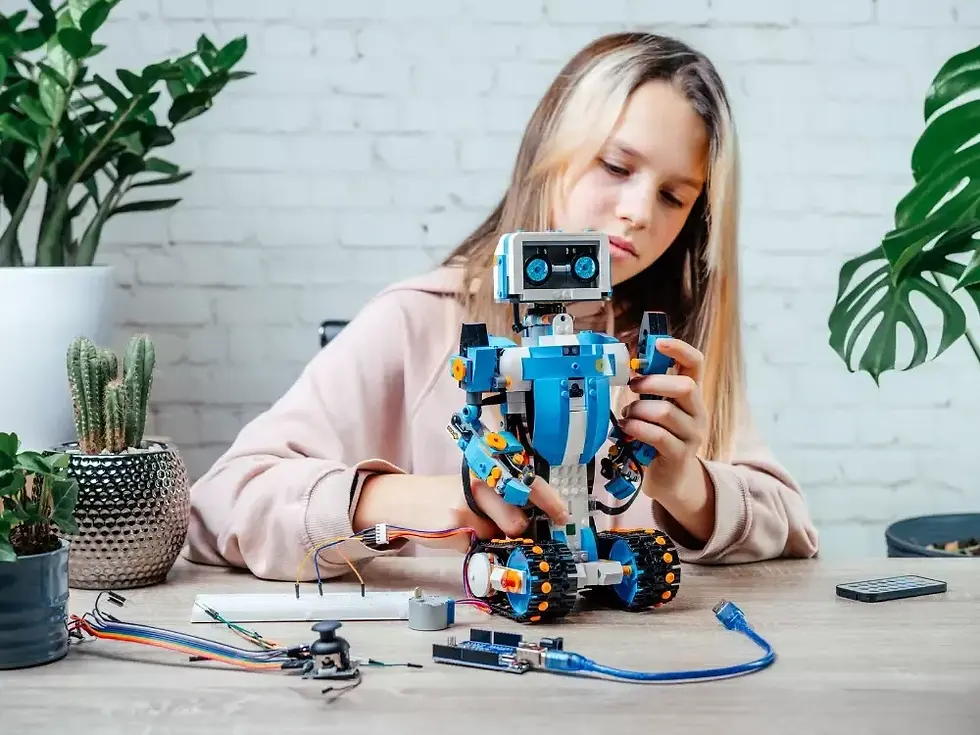
More advanced robotics where they can actually program behavior, sensors, and logic
App or game creation tools where they can build something they’d actually use
AI tools, 3D design, or basic electronics for older kids who want to explore tech on a deeper level
Project-based kits: build a security system, a weather station, a wearable gadget, etc.
Key: Hand them something that feels like real tech, not a toy.
Teens: “I’ll Do It If It Matters”
For teens, STEM needs a purpose bigger than “because it’s educational.”
Think about:
Courses or kits that connect to real life – robotics for entrepreneurship, coding for websites, AI for creative projects
Gear for passion projects – Arduino, Raspberry Pi, 3D printing, video and audio tools
Online programs or camps that offer community and challenge, not just videos to watch
Key: Tie STEM to something they care about: music, gaming, climate, social justice, design, or money.
How to Make STEM Feel Like Christmas, Not Homework
If you hand your child a “learning kit” like it’s a math assignment, don’t be surprised when they act like it’s… a math assignment.
Here are ways to make STEM feel magical:
Turn it into an experience, not just a box
“STEM Night” where the whole family tries the first project together
Hot chocolate, snacks, and a simple challenge: “Can we make this light blink before dessert?”
Create a reveal moment
Instead of burying the kit under ten other gifts, make it the main event
Wrap components separately: the board, the sensors, the booklet—so curiosity builds
Celebrate every win like a big deal
First LED lights up? Take a photo.
First robot moves? Film it.
First game works? Make everyone play.
Keep it visible
Don’t shove their project into a closet
Set up a “Maker Shelf” or “Robotics Corner” so they’re reminded to keep going
When Money Is Tight: STEM on a Budget
You do not have to spend hundreds of dollars to give a meaningful STEM gift. If funds are tight this year, here are honest options that still count:
One solid kit instead of five cheap toys
Free coding platforms + a basic, low-cost microcontroller board
Print-your-own STEM challenge cards:
Build the tallest tower from recyclables
Design a “bridge” that can hold a certain amount of weight
Create a Rube Goldberg machine from things in the house
Pair one small purchase with a pack of homemade “STEM Challenge” cards and you’ve just created months of learning.
The Bigger Picture: You’re Not Just Buying a Gift
Kids might remember the toy they begged for.But they will absolutely remember the moment they:
Made a robot move for the first time
Coded their name to scroll across an LED display
Solved a problem that felt “impossible” an hour earlier
That feeling—“I can figure this out”—is one of the most powerful gifts you can give a child.
This Christmas, you can still do the cozy pajamas, the sweets, the fun stocking stuffers. But if you’re done with disposable toys and you want something that actually shapes who they become…
Give the gift of STEM.Give them something that lights up more than just a screen—Give them something that lights up their mind.

Comments